How StockX’s Finance and Marketing Teams Built a Shared Playbook for Smarter Media Investment
%20Riebau.avif)
- Industry
- Apparel, Shoes, and Accessories
- Channels
- GoogleLinear TVYouTube
- Features used
- Casual MMMGeoLift
The challenge
For years, StockX’s finance and marketing teams lacked a shared framework for optimizing the company’s largest non-cost-of-goods-sold expense: Ad spend. For a low-margin, high-volume marketplace business such as StockX, informed decisions about how ad spend is allocated and optimized can meaningfully move overall profitability.
As Ellyn Riebau, Director of Marketing Finance, put it, “We were managing our biggest expense with a lot of guesswork. Outside of a couple internal Google Shopping incrementality tests, every other channel ran on static budgets. And for channels like YouTube, we had no way to see beyond last click conversions, so we were relying on limited attribution outputs and marketing’s gut feel to decide where dollars went.”
The solution
In 2024, StockX brought on Haus’ integrated incrementality testing and Causal MMM (cMMM) platform to replace gut feel and limited attribution data with a shared, defensible measurement framework. For the first time, Ellyn’s finance team could see a non-clicks-based view of where ad dollars were driving incremental Gross Merchandise Value (GMV), where they weren’t, and how far they could push each channel before returns decayed.
By adopting better measurement and decision-optimization tools with Haus, StockX improved media performance while building a transparent, cross‑functional capital-allocation process that both finance and marketing trusted. “Doing this work with Haus has moved finance’s view of marketing from a cost center to a growth engine that is justified,” says Alex Turner, StockX’s Head of Growth Marketing.
The result
Unlocking a non-click channel
Before Haus, StockX’s marketing team had no way to prove that a view-based channel like YouTube was worth scaling. Finance wasn't opposed to the investment—they just needed evidence that YouTube drove more than nebulous “brand awareness.”
Incrementality testing delivered that evidence. Using a 20% holdout counterfactual, YouTube surpassed their iROAS profitability benchmark by 228% and gave the team proof that YouTube had ample room to scale. The test also revealed significant latent effects: iROAS improved by an additional 169% during the two-week post-test window, confirming that YouTube’s impact extended well beyond the initial exposure period.
Layered into Haus’ Causal MMM, these results did two important things for Ellyn’s team:
- They repositioned YouTube from a soft “brand” expense to a provably incremental performance channel.
- They gave finance a reliable marginal return curve for YouTube across seasons and spend levels, so future budget decisions could be grounded in modeled reality vs. a snapshot in time.
Optimizing the media mix ahead of peak season
Incrementality testing gave StockX the confidence that upper-funnel channels could drive real results. Causal MMM then gave them the precision to see which ones were doing so efficiently, and which had diminishing returns that made reallocation the smarter move.
Heading into Q4 2025, with efficiency as the top priority, marketing and finance used the Causal MMM scenario planner to pressure-test the entire media mix. The model showed that channels like streaming, linear TV, and paid social did not beat Google Shopping’s marginal return at current spend levels. So between September and October, the team made significant reallocation moves, shifting budget toward the channels with the highest marginal return.
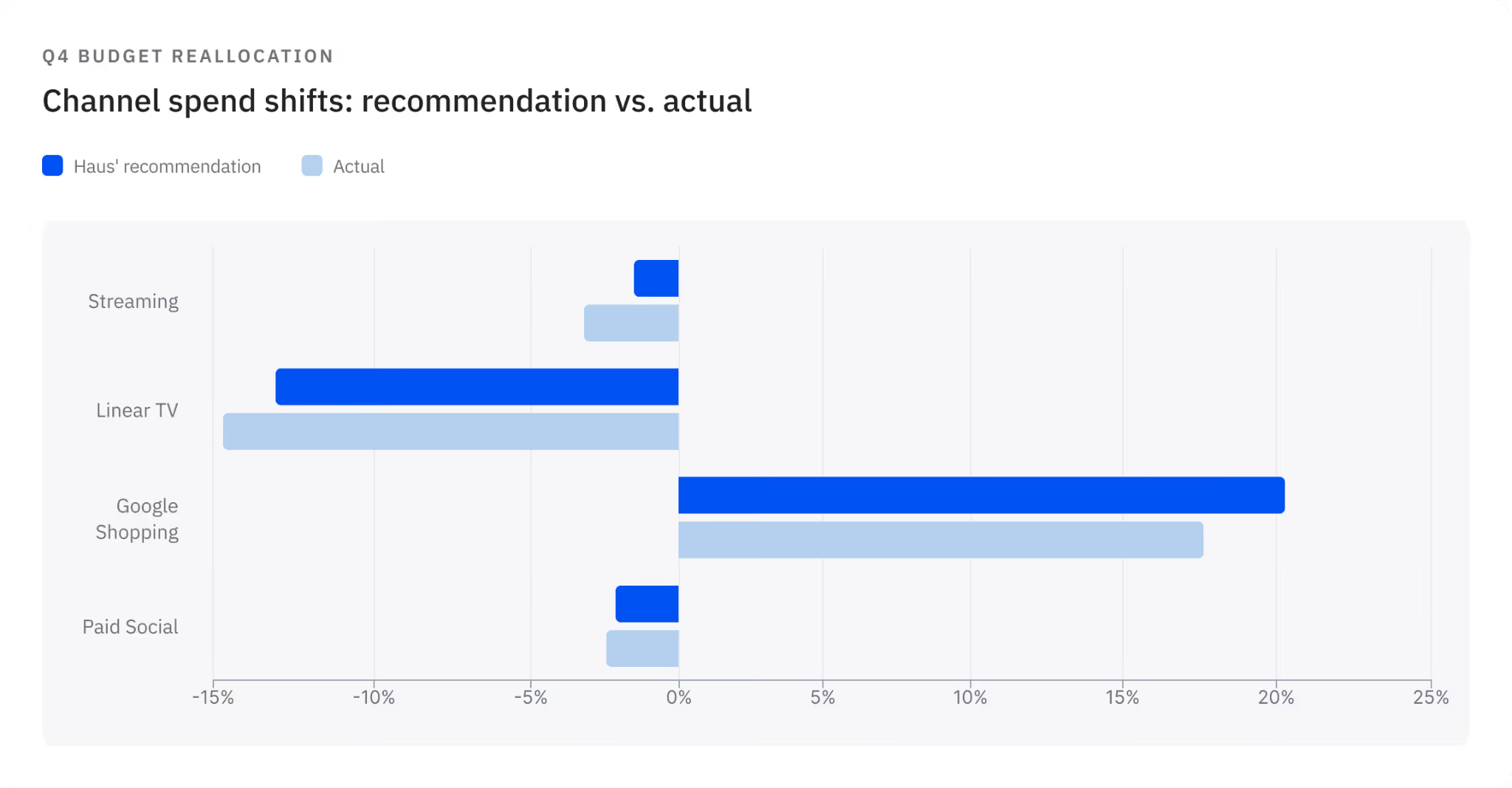
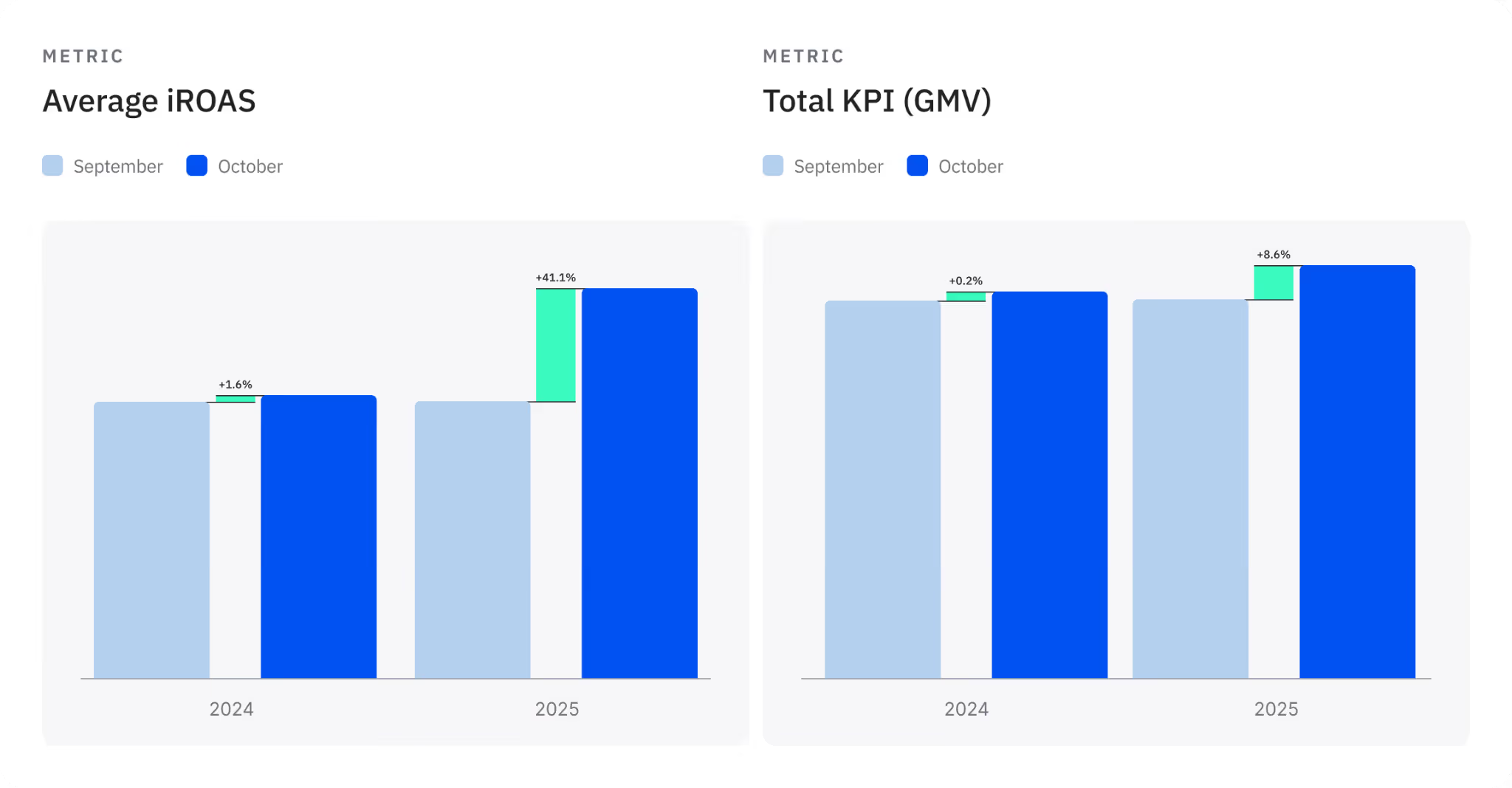
For Ellyn and the finance org, seeing iROAS accelerate 41% and Gross Merchandise Value (GMV) grow 8.6% proved that cMMM could drive P&L-relevant outcomes and built the trust needed for even bolder optimizations. Heading into 2026, with Google Shopping now pushed closer to its saturation point, the shared mandate from finance and marketing was clear: Find another scalable opportunity.
Uncovering a hidden gem
Since onboarding Causal MMM, one recommendation kept surfacing: StockX had room to scale on media platform Criteo. From a finance perspective, Criteo had long lived in the “nice to have, but hard to prove” bucket, with low absolute spend and ambiguous incrementality that made it easy to cut when budgets tightened.
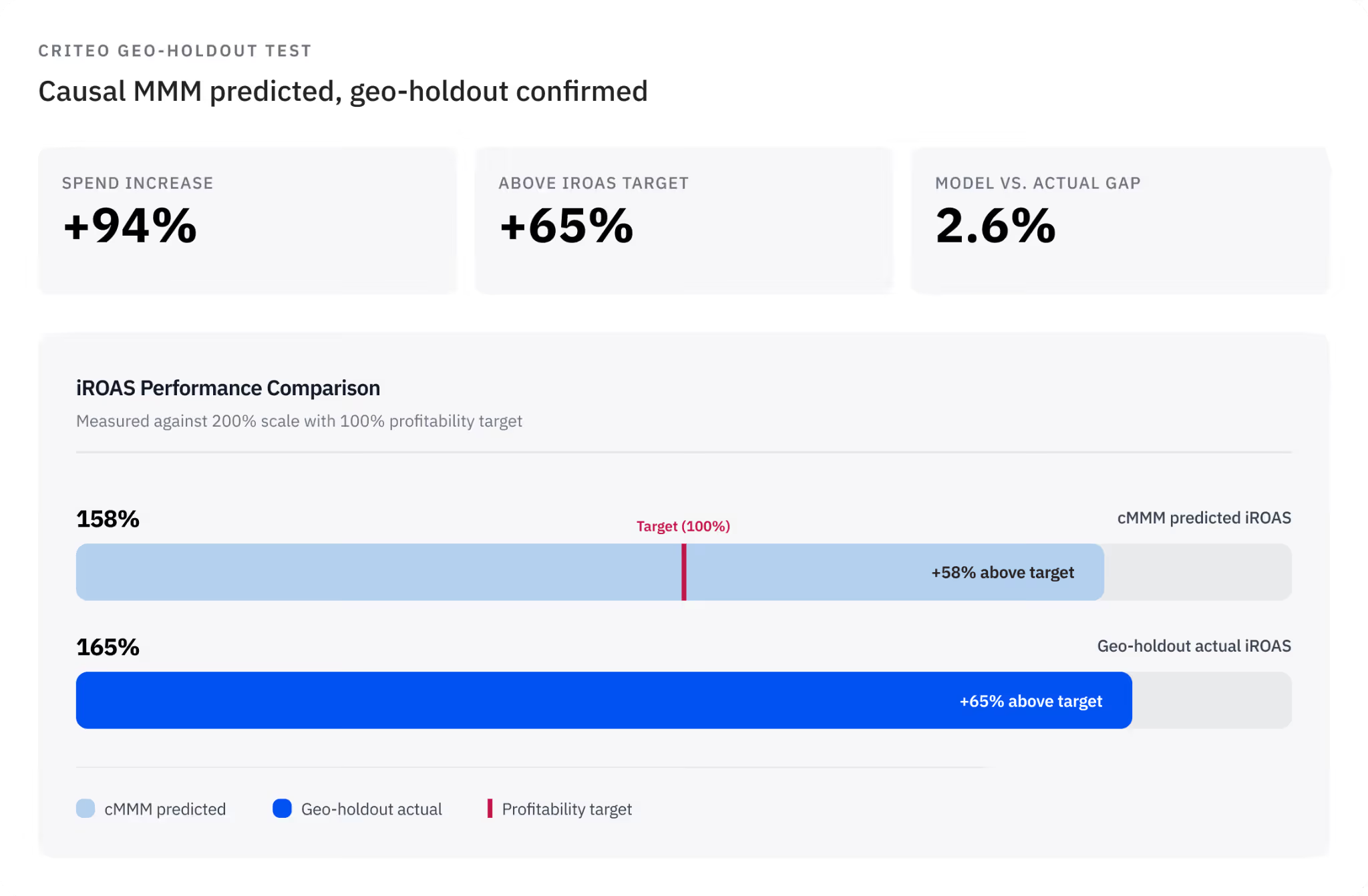
The model suggested differently, so the team put Criteo to the test. StockX ran a three‑week GeoLift holdout test plus a one‑week PTW, essentially doubling Criteo’s spend pressure in line with Causal MMM’s recommendation.
The results:
- Criteo exceeded StockX’s profitability iRoAS target by 65.2% at 94.2% increased spend pressure.
- The test confirmed that what had looked like a marginal awareness channel was, in fact, a high‑leverage driver of incremental GMV at scale.
For both the finance and marketing teams, this was a full-circle moment where Haus’ Causal MMM + GeoLift flywheel showed its value. Causal MMM identified an opportunity they had previously not considered, GeoLift validated the opportunity with a clean, P&L‑relevant incrementality test, and the team actioned off the results by reallocating budget with confidence.
For StockX, Haus’ causal marketing platform serves a purpose beyond media optimization and forecasting. It served as a unifying mechanism to get marketing and finance on the same page, which isn’t always so easy at a large, complex organization. With proper measurement in place, Ellyn and her team built a more productive, transparent partnership with marketing that rewarded data‑driven budget decisions grounded in true causality.
Next steps
About StockX
StockX’s powerful platform connects buyers and sellers of high-demand consumer goods from around the world using dynamic pricing mechanics. The disruptive model affords access and market visibility powered by real-time data empowering buyers and sellers to determine and transact based on fair market value.
Published: May 4, 2026