Is AppLovin More Than a Hype Channel?
AppLovin is proving it can drive efficient DTC growth — now the question is how durable that performance is as the channel matures.
Jun 18, 2026

Every growth marketer knows the feeling.
Meta is still Meta. Google is still Google. TikTok is no longer the new kid in class. Retail media networks are somehow both everywhere and still hard to evaluate. And every quarterly planning cycle seems to end with some version of the same question: Where does the next dollar of efficient growth come from?
The answer is rarely obvious. Most new channels either lack scale, lack proof, or look great in platform reporting right up until someone asks whether the sales were actually incremental.
Enter AppLovin.
Long known as a mobile gaming ad network, AppLovin has more recently become one of the most discussed performance channels in DTC. The pitch is compelling: Massive mobile app inventory, unskippable video format, a powerful optimization engine, and a user base that many brands have not meaningfully reached through Meta, Google, or TikTok.
The early industry read has been unusually positive – eMarketer has covered AppLovin’s push into ecommerce as a meaningful growth opportunity.
But adoption and platform momentum are not the same thing as incrementality; the important question is whether the hype holds up when we look at actual business impact.
In order to do that, we analyzed 15 months (January 2025 - March 2026) worth of AppLovin incrementality test data across DTC and omnichannel brands spanning dozens of unique verticals to better understand where the channel performs well, where it is more limited, and how brands should think about scaling it from here.
The short version: AppLovin is real and often efficient, appearing especially strong for DTC. But it does not behave like every other channel in the media mix, a distinction that could determine whether the channel is a good fit for your brand.
Understanding the data
Before getting into the findings, a few notes on the analysis:
- The average AppLovin test in this sample ran at roughly $4.8K in daily spend.
- The median test duration was 20 days.
- During the test period, AppLovin represented a median of 4.6% of the brand’s paid media spend, with the middle 50% of tests ranging from 3.2% to 9.3%.
- The average brand in the dataset was spending roughly $3M per month on digital advertising.
- Unless otherwise noted, results are benchmarked against other channels each brand tested in Haus.
That last point is worth emphasizing: Rather than compare AppLovin against a generic benchmark or raw iROAS, we are looking to understand how it performs relative to the other channels the same brands have tested. This gives us a cleaner read on how AppLovin is earning its keep in the media mix.
AppLovin is a strong DTC performer
The main finding is straightforward: AppLovin is performing well for DTC brands.
Across the tests we analyzed, AppLovin’s DTC efficiency was 1.11x higher than the average of other channels those same brands tested.
It also compares favorably when we look at where AppLovin ranks in the broader channel mix. AppLovin tests landed in the top quartile of channel performance 39% of the time, compared to an expected baseline of 25%.
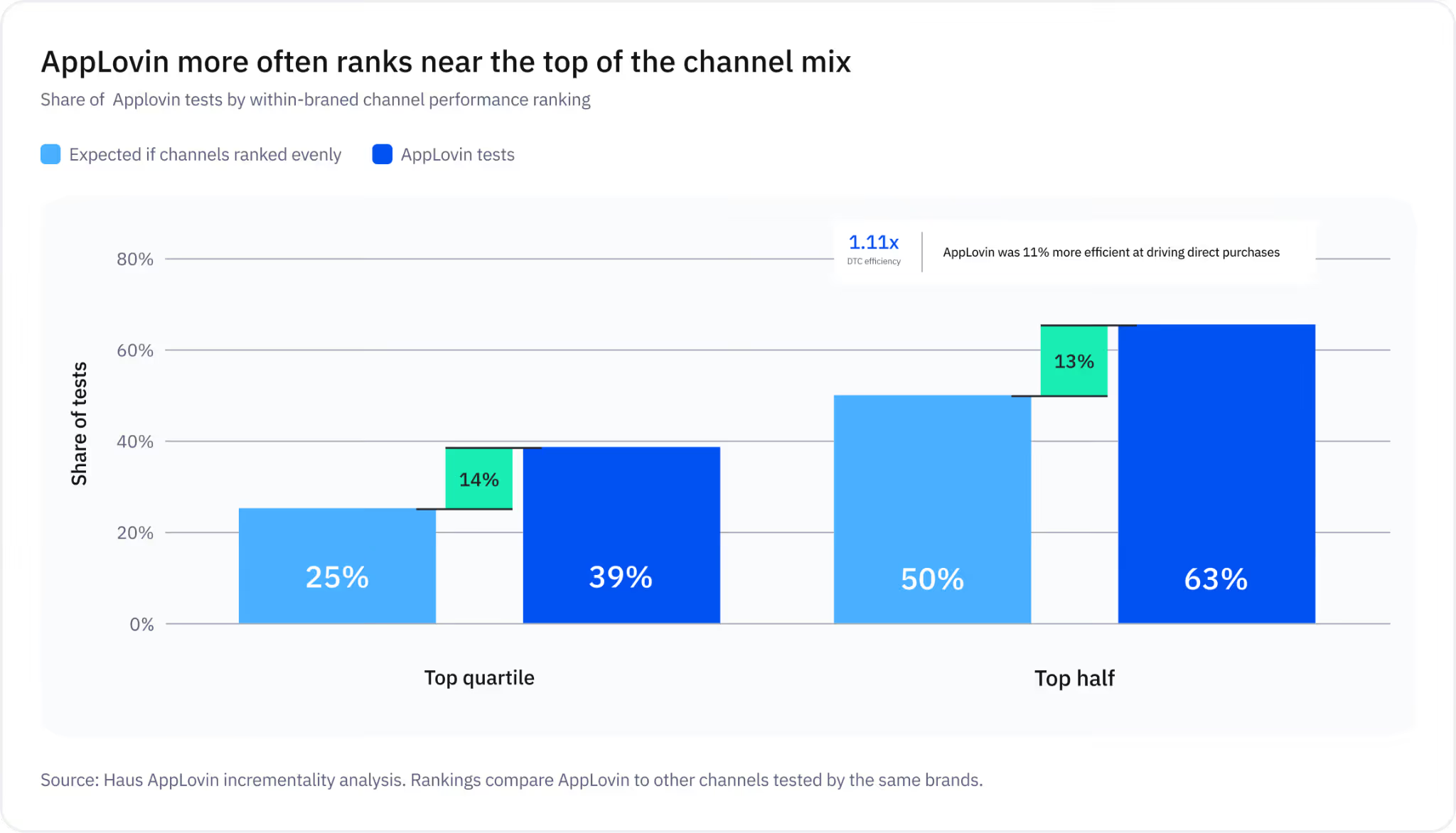
That is a strong result for a channel that is still relatively early in its DTC lifecycle.
Put more simply: AppLovin is not just occasionally working. It is often one of the best-performing channels in the mix. In many cases, it looks like a credible second or third best channel for brands that are trying to diversify beyond their core performance platforms.
AppLovin works quickly, and that can be a feature
One of the most interesting things about AppLovin is that its effects appear to be more immediate than many other channels.
At Haus, we have a feature called a post-treatment window (PTW) which allows brands to measure the latent or delayed effect of advertising on prospects in their funnel.
Think of it as turning a standard holdout experiment into a longitudinal study: We continue to track the holdout group – prospects who have just gone weeks without seeing any ads – for a few extra weeks after the experiment to see how long it takes their demand to come back to baseline.
Across AppLovin tests, post-treatment window lift was 1.18x the treatment-period result. For other channels, the comparable figure was 1.39x.
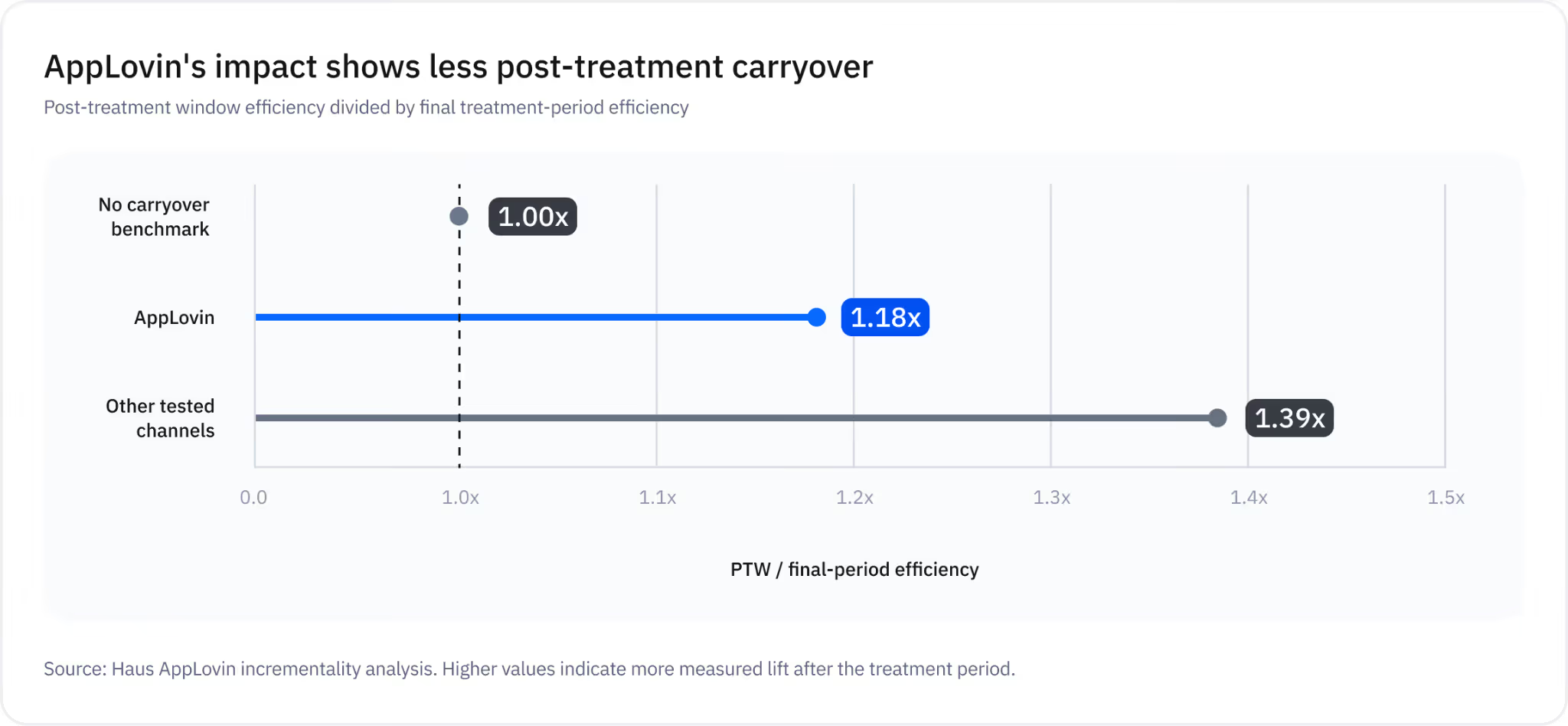
One way to frame that is that AppLovin has less latent impact than other channels. Another, equally valid way to frame it is that AppLovin appears to work quickly.
That distinction is worth noting because fast feedback is often valuable – a channel that drives most of its impact during the treatment period can be easier to evaluate, optimize and make budget decisions around. You do not necessarily need to wait as long to understand whether the channel is doing its job.
We often talk to businesses who need their marketing spend to pay back quickly based on cash conversion cycles. If this is the case for your business, Applovin’s ROI payback might be valuable.
This is very different from a channel like YouTube or CTV, where impact may unfold over a longer period of time and show up across different sales channels. Those channels can be extremely valuable as well, but they require more patience and a different measurement lens.
AppLovin appears to sit closer to the performance end of the spectrum. Because AppLovin currently optimizes towards post-click attribution with no view-through, this structural difference may explain the shorter tail. For brands looking for short-term DTC impact, that’s a strength.
AppLovin drives a higher portion of lift from DTC relative to other media channels
The most constructive finding is that AppLovin’s impact does not appear to translate across sales channels as strongly as other tested channels.
For omnichannel brands in the sample, AppLovin drove a +25% halo effect beyond DTC. Other channels tested by the same set of brands drove a median +40% halo effect. (It’s worth noting that halo effects can vary meaningfully by brand and vertical.)
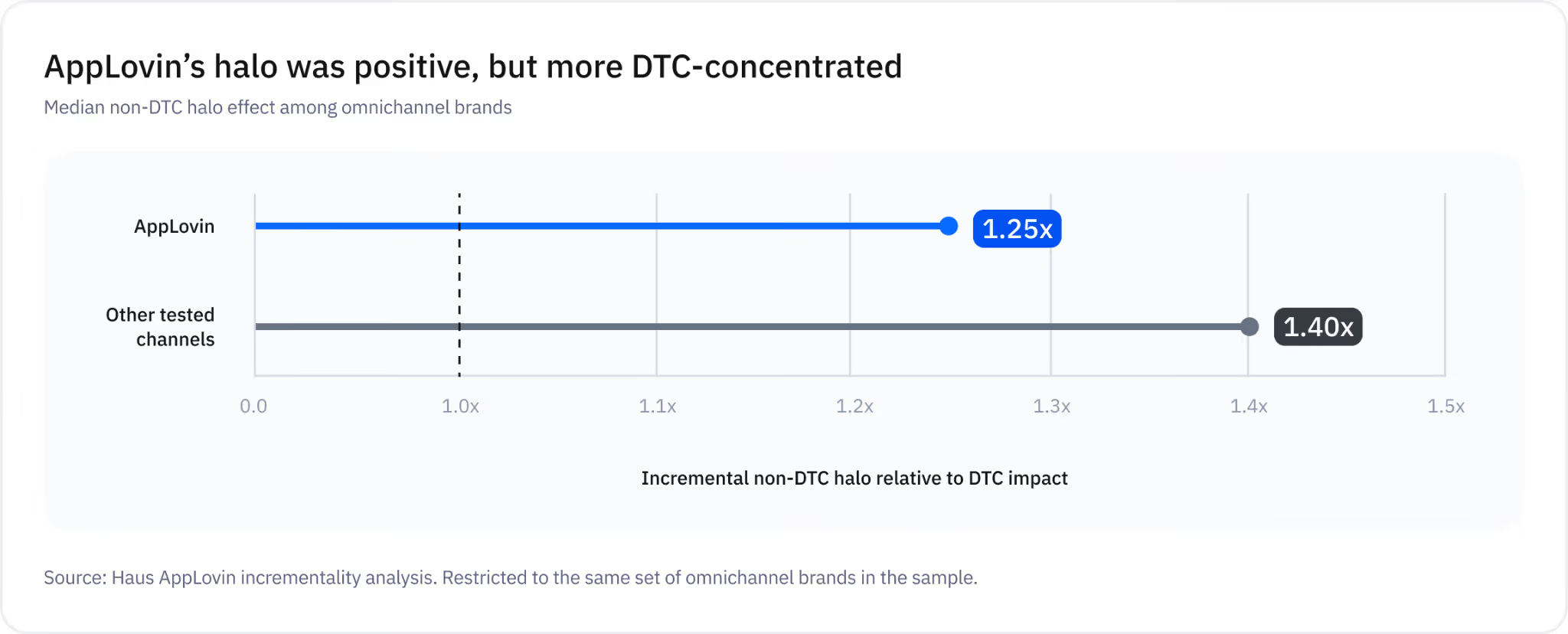
That gap is meaningful, but it is not especially surprising.
AppLovin’s ecommerce opportunity is built on performance-oriented mobile app inventory. Users are in a mobile environment and the ads are often direct-response oriented. In that context, it makes sense that AppLovin would drive more dot-com sales than delayed Amazon, retail, or wholesale impact.
This is where brands need to be precise about the job they are hiring the channel to do.
If the goal is efficient DTC acquisition, AppLovin is often well-equipped. If the goal is broad omnichannel demand creation, the data suggests brands may benefit from having more conservative expectations.
AppLovin shines as a net-new acquisition channel
A common concern with any up-and-coming performance channel is that it may simply be capturing demand from existing customers rather than growing the customer base.
The new-versus-repeat data does not suggest that is the dominant story here.
Across the AppLovin tests we analyzed, new customers represented roughly 66.3% of DTC impact. That was very similar to other tested channels — AppLovin had a higher new-customer share than the brand’s tested channel median 51% of the time.
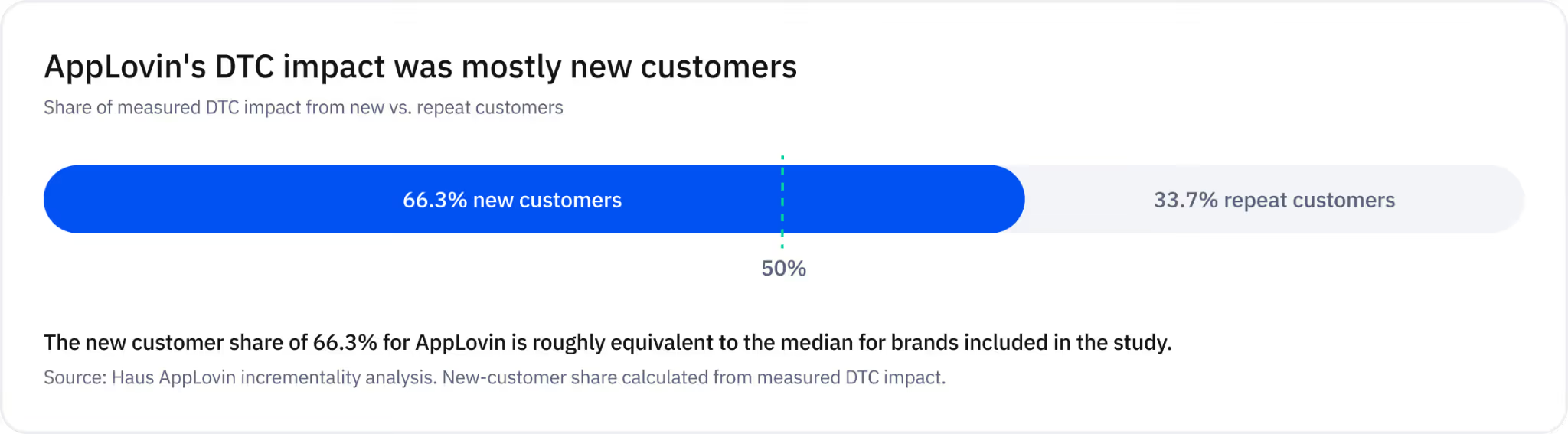
AppLovin has also started giving advertisers more control over customer-acquisition objectives, including Prospecting Campaigns that optimize toward new purchasers rather than treating new and returning customers the same.
This does not mean every AppLovin dollar is a new-customer dollar, or that brands should ignore customer quality, LTV or contribution margin. But it does support the case that AppLovin can be evaluated as a real acquisition channel, not just a short-term conversion tactic.
Does AppLovin's early signal hold at scale?
The most important forward-looking finding is that AppLovin’s performance has evolved as the channel has matured.
To measure this without being misled by seasonality, we held every AppLovin test to a consistent bar: Did it beat the median efficiency across all tests a brand ran in the same quarter? In other words, did AppLovin outperform the typical test happening at the same time?
Across all AppLovin tests, 64% cleared that bar. But the trajectory matters more than the average. Through 2025, AppLovin beat the typical test a clear majority of the time – between 63% and 85% each quarter. In 2026, that has settled closer to a coin flip: 53% in Q1 and 50% in Q2.
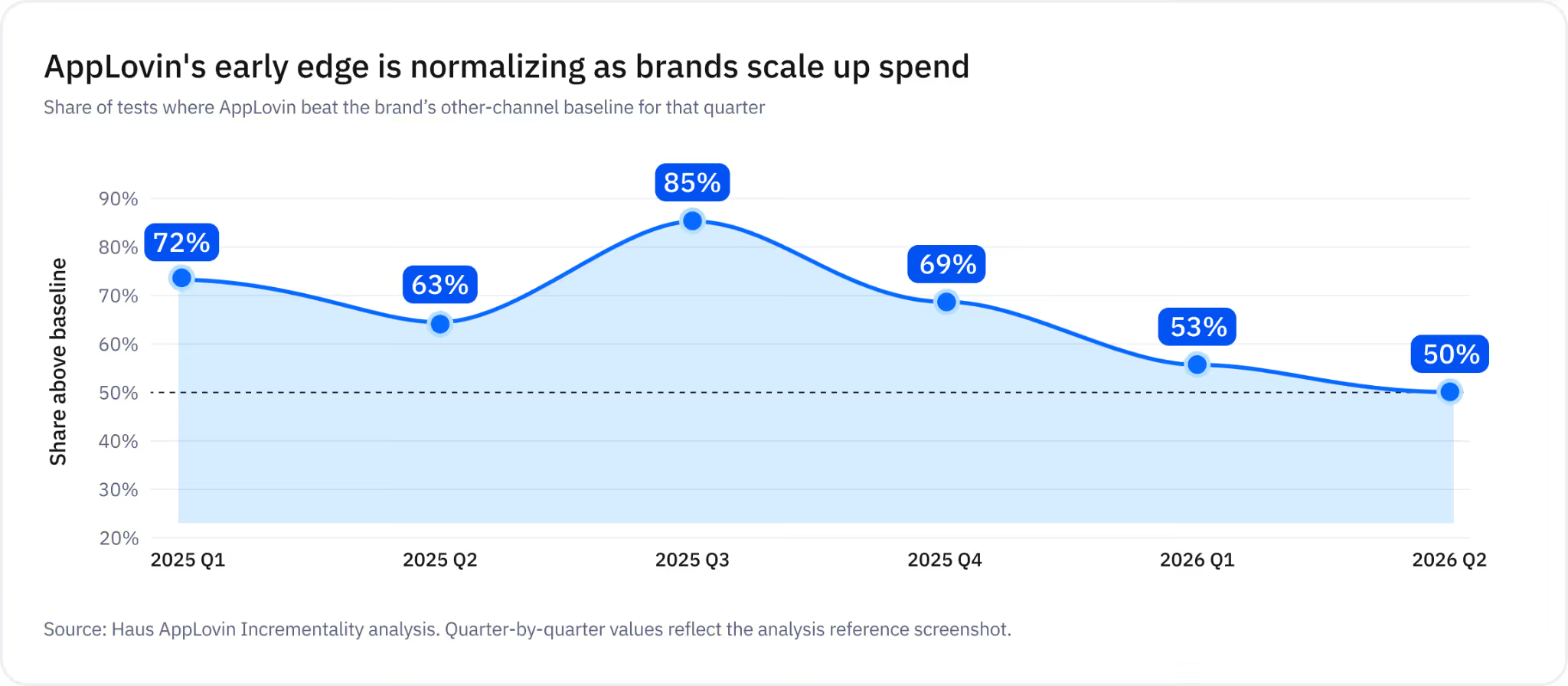
It would be easy to incorrectly overstate this as “AppLovin is getting worse.” That is too simplistic.
A more accurate read is that AppLovin is maturing out of its early-adopter phase. Looking only at each brand's first AppLovin test, the channel still performs well: First-time tests beat the typical result 53% of the time so far through 2026, an excellent hit-rate for a new channel. What has changed is what happens at scale: As brands run repeat tests and push more budget through the channel, results converge toward their median. AppLovin is no longer a near-automatic win on every test; it is a channel businesses have to optimize to keep hitting efficiency targets as they grow.
This is exactly what you would expect from an early, evolving channel. The first wave of adopters may have had cleaner access to underpriced inventory. As more DTC brands enter the auction, performance normalizes: CPMs rise, creative fatigue shows up faster, and the best early pockets of opportunity get harder to find. The mix of advertisers testing the channel has likely shifted as well.
Critically, brands aren’t walking away; they’re leaning in. Brands that have tested AppLovin since January 2026 have increased investment by over 50% relative to a ~20% median increase for brands who haven't run a test since then.
Among brands active on AppLovin and connected to Haus via API, the median brand's share of digital budget has climbed steadily through 2026, from under 5% in January to over 8% in May, holding there into June. Brands that began testing in the Q4-to-Q1 wave have kept growing their commitment as they have found their footing. Continuous testing is turning into continuous budget gains.
That combination is the real story. Efficiency has come back to Earth from its 2025 highs, but brands are giving AppLovin more budget, not less. The channel is maturing from "does this work?" to "how far can this scale?"
Those are different questions and they require different tests. Performance varies over time for a variety of reasons – as you’ve heard us say before: What works for one business may not work for another, and brands should test for themselves.
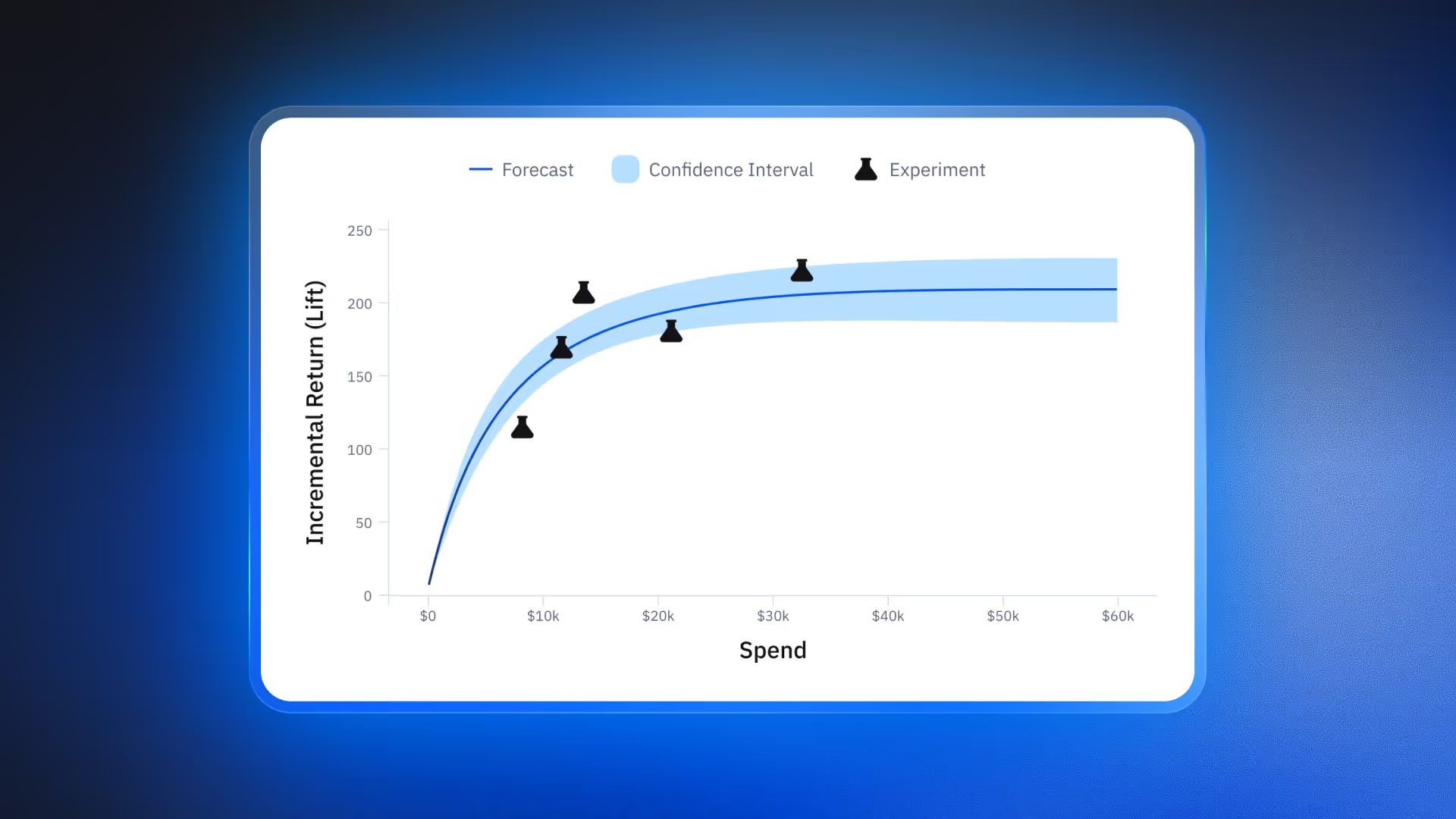
If AppLovin is under 5% of your spend, you should still be validating whether it is worth continuing to invest in. As it approaches 10% or more, the question becomes marginal efficiency: What happens as spend increases, where does the response curve start to bend, and how often do we need to retest to keep our read fresh?
For most brands, AppLovin has earned a place in the testing roadmap, but not a blank check. The channel is promising enough to scale into, but volatile enough to require consistent re-evaluation as you go.
How brands can use this AppLovin marketing measurement data
It’s tempting to take insights like these and assume they will apply cleanly to your business, but they might not – every brand has a different media mix, creative strategy, product category, sales channel mix and level of existing demand.
With that obligatory disclaimer out of the way, here are some Haus-approved next steps:
- If you are a DTC-heavy brand looking to diversify beyond Meta and Google, AppLovin is worth testing. The DTC efficiency signal is strong enough that the channel should be on the shortlist and, due to the nature of the channel, you won’t have to wait long for a read on whether it’s working.
- If you are omnichannel, measure AppLovin across all meaningful sales channels, but do not assume the halo effect will look like YouTube, CTV or other broader-reach channels. The data suggests AppLovin’s relative strength is dot-com impact.
- If AppLovin is already working, do not just scale indefinitely. Run spend-level tests to understand whether you are still on the efficient part of the curve or whether marginal dollars are getting more expensive.
- If results have softened recently, don't write off the channel immediately. Investigate CPMs, creative fatigue, audience saturation, campaign setup and auction competition. Some volatility should be expected in an early channel.
- Use post-treatment windows appropriately. AppLovin may not require the same long-tail patience as YouTube or CTV, but validating delayed effects still matters, especially for higher-consideration products.
So, does AppLovin perform?
Based on the data we analyzed, yes – especially for DTC brands looking for efficient, fast-moving acquisition beyond their core platforms.
But the more useful answer is the one AppLovin forces marketers to wrestle with: Not every good channel is good for the same reason. YouTube can be valuable because it is underreported, delayed and full-funnel. AppLovin appears valuable for almost the opposite reason: It is more immediate, more DTC-focused and often strong enough to rank near the top of the tested channel mix.
That is what makes it interesting.
The channel is not a magic replacement for Meta, Google or broader upper-funnel investment. It is also not just hype. It is a real, early and still-evolving channel that seems to have found a meaningful role for DTC advertisers.
The brands that get the most out of it will probably not be the ones that decide AppLovin is either a gold mine or a mirage. They will be the ones that treat it like what it is: A promising new performance channel, with enough signal to test seriously and enough volatility to keep testing as they scale.
That may be less satisfying than a universal verdict, but it will lead to smarter budget decisions.
Subscribe to our newsletter
Article Tags
Article Authors

Tyler is Head of Solutions Consulting at Haus. With a decade of experience in marketing, he has spoken at The Lead Innovation Summit and Google’s Rethink ROI, and has authored numerous reports on marketing measurement.
.png)
.png)


.png)
.png)
.png)

.avif)

.avif)
.avif)

.avif)
.avif)
.avif)
.avif)
.avif)


.avif)

.avif)

.avif)
.avif)
.avif)
.avif)
.png)
.png)
.avif)

.avif)
.avif)
.avif)
.avif)
.avif)
.avif)

.avif)

.avif)

.avif)

.avif)
.avif)
.avif)
.avif)
.avif)
.avif)
.avif)
.avif)
.avif)

.avif)
.avif)
.avif)

.avif)

.avif)
.avif)
.avif)
.avif)
.avif)


.avif)
.avif)


.avif)
.avif)
.avif)

.avif)
.avif)
.avif)
.avif)
.avif)
.avif)
.png)
.avif)
.png)
.avif)